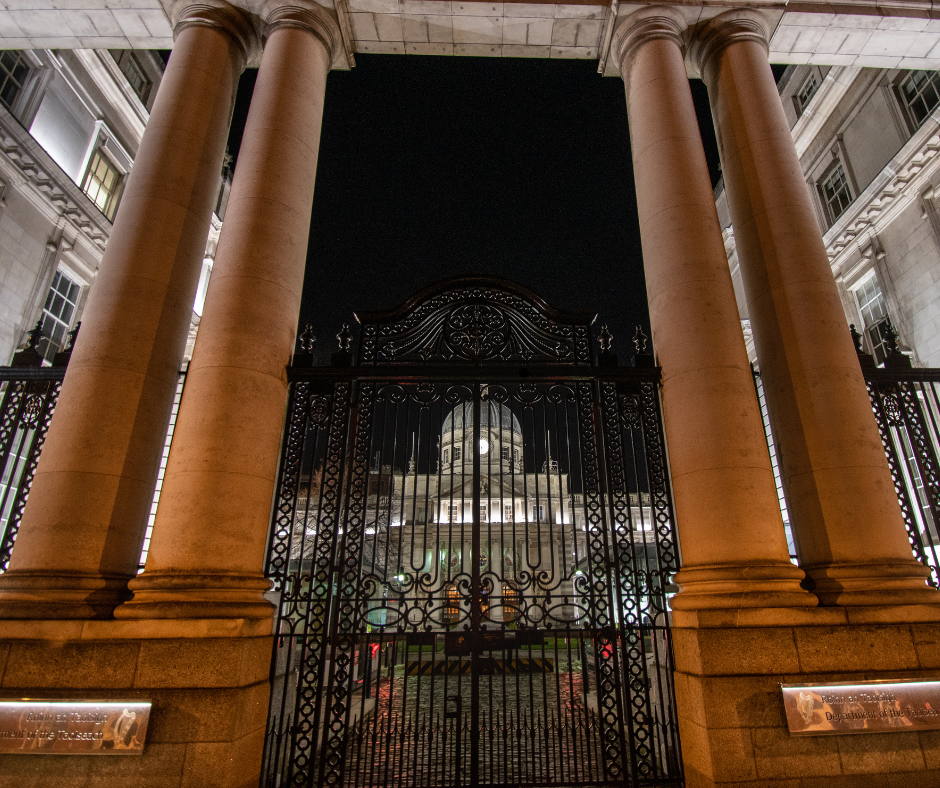
Irish politics in 2026 is poised to be shaped by a volatile mix of leadership uncertainty, high-stakes by-elections and a series of defining policy choices spanning housing, climate action, foreign affairs and the broader direction of the State. After what many view as a lacklustre first year for the current coalition, expectations are high for a sharper and more combative political landscape, with the issues outlined offering an early insight into the pressures and battles the government will be forced to confront in the year ahead.
EU Presidency
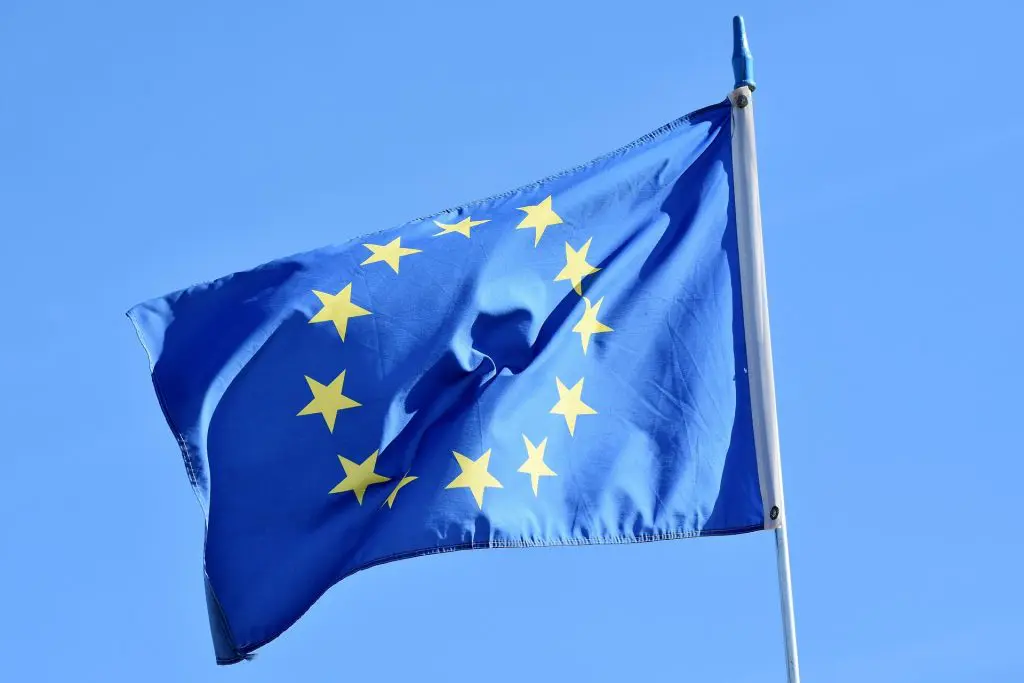
Ireland will play host to world leaders, diplomats, and foreign dignitaries in the latter half of the year, as it takes over the EU Presidency. The last time that we held the presidency, Enda Kenny was Taoiseach, the Troika was in charge of the country’s finances, and no one had the faintest idea that Donald Trump wanted to be U.S. president – likely not even himself.
Given the significant time that has passed since then, Ireland and the government will be hoping to showcase to Europe and the world that it is in a much healthier place than 2013. The presidency is important because it gives Ireland an opportunity to steer the EU legislative, promote policy initiatives that positively impact Ireland, and boost national profile which can be of great benefit to an outward international trade economy like ours.
As an island on the edge of Europe, following on from Brexit, the presidency won’t mean Ireland can change the world, but it does represent a soft power that can be used to influence other countries and international actors. Plus, at a reported cost of €290 million to the State, we will want our term to go well so we get bang for our buck.
Fianna Fáil Leadership
The leadership of Fianna Fáil in 2026 will continue to be under close scrutiny, largely due to the fallout from the party’s disastrous presidential campaign. Taoiseach and party leader Micheál Martin saw his authority weakened after backing former Dublin GAA manager Jim Gavin, whose campaign collapsed amid revelations about personal financial issues. The debacle left Fianna Fáil looking disorganised and exposed, raising internal questions about Martin’s judgment and opening speculation about his long-term leadership prospects.
Deputy Leader Jack Chambers, who played a central role in Gavin’s nomination, finds his position similarly complicated. While he downplays personal blame and remains a trusted organisational figure under Martin’s leadership, his prominence in the failed campaign sparks debate over any future leadership ambitions. Some see him as well-placed for a succession bid, while others view his association with the debacle as a liability.
In the build up to Ireland concluding its EU Council presidency at the end of 2026, media speculation will intensify over Martin’s next move. Reports suggest he may step down afterward to avoid a fractious internal battle, with figures like Jim O’Callaghan, Darragh O’Brien, and Dara Calleary waiting in the wings. A delayed or mishandled transition risks a more disorderly contest, leaving the party and government coalition vulnerable to further instability. Although, many believe Martin will fight on as he remains adamant to lead the party into a fifth general election.
By-Elections
The upcoming by-elections in Galway West and Dublin Central are set to be among the most closely watched political contests of 2026, triggered by Catherine Connolly’s election as President and Paschal Donohoe’s departure to become MD and Chief Knowledge Officer at the World Bank. Both constituencies present opportunities and challenges for Fine Gael, with Simon Harris and his team under pressure to put up a good showing at the polls. Donohoe’s former seat in Dublin Central has historically been a Fine Gael safe seat with Donohue on the ballot, while in Galway West, Senator Seán Kyne came agonisingly close to a Dáil seat in the last general election, making him a natural contender to try again.
Dublin Central adds extra intrigue, as it is home to Sinn Féin leader Mary Lou McDonald, with her party’s local councillor Séamus McGrattan currently the bookies’ favourite to claim the seat. However, McGrattan may face a dramatic challenge from Gerry ‘The Monk’ Hutch, who narrowly missed out on the last seat to Labour’s Marie Sherlock in the general election and could look to mount another bid for the Dáil this time. With many potential candidates yet to formally declare in both Galway West and Dublin Central, these by-elections promise a mix of high-stakes strategy, party rivalry, and local drama – making them must-watch events for anyone following Irish politics closely.
Left Unity
The question of left unity will once again rise to the surface of Irish politics throughout the year ahead, following the unexpected momentum generated by Catherine Connolly’s successful presidential campaign, where much of the fragmented left coalesced behind a single candidate. Sinn Féin, Labour, the Social Democrats, People Before Profit and a range of left-aligned independents all pointed to Connolly’s victory as proof that cooperation, rather than competition, can deliver results under the right conditions.
Since then, senior figures across the left have spoken more openly about the need for coordination, even if formal alliances remain politically sensitive. The campaign can be used as a clear reference point to show that ideological differences can be managed when there is a shared objective and a credible standard-bearer.
That unity, however, is set to be tested almost immediately in the Galway West and Dublin Central by-elections, where every major left party has signalled its intention to run candidates. While this risks splintering the vote, it also offers a practical experiment in whether an informal strategy of “Vote Left, Transfer Left” can be encouraged among voters. How transfers flow between Sinn Féin, Labour, the Social Democrats, People Before Profit and left-leaning independents will be closely analysed as a litmus test for deeper cooperation.
Strong transfer discipline could embolden calls for a coordinated approach at the next general election, with the longer-term ambition of assembling a viable left-led coalition government that excludes both Fine Gael and Fianna Fáil. Whether pragmatism can ultimately outweigh party branding and leadership ambitions remains uncertain, but for the first time in years, the prospect of a unified left strategy feels politically conceivable rather than purely theoretical.
Housing & Infrastructure Delivery
Infrastructure and housing will remain defining political battlegrounds in 2026, following the government’s publication late last year of two flagship strategies: Accelerating Infrastructure Report and Action Plan and Delivering Homes, Building Communities 2025–2030: An Action Plan on Housing Supply and Targeting Homelessness. Together, they set out an ambitious blueprint for addressing long-standing deficits in transport, energy, water and social infrastructure, while also tackling chronic undersupply in housing. Central to this vision is a commitment of €275.4 billion in infrastructure investment to 2035, contingent on continued economic stability, alongside a pledge to deliver 300,000 new homes by 2030. On paper, the scale of ambition marks a shift from crisis management toward long-term planning.
Yet the political durability of these plans will hinge on delivery rather than intent. While the housing strategy sets an overall target of 300,000 homes, the absence of firm, binding year-on-year delivery targets has already drawn criticism from opposition parties and housing advocates. Critics argue this was a deliberate choice by the government, effectively providing a “get-out-of-jail-free card” that allows ministers to defer accountability until the end of the decade. As infrastructure delays, planning bottlenecks and capacity constraints continue to dominate headlines, 2026 may prove a crucial test of whether these plans represent a genuine turning point or simply another set of glossy documents that promise more than the system can realistically deliver.
Climate
Climate policy is set to become an even sharper political fault line in 2026 after Minister for Climate Darragh O’Brien conceded that the State is likely to achieve only around half of its 51 per cent emissions-reduction target by 2030. Minister O’Brien has acknowledged a significant shortfall against the legally binding goal of cutting emissions to roughly 30 million tonnes of CO₂ equivalent, down from 61 million tonnes in 2018. While stressing that substantial reductions are expected in the early 2030s, particularly once large-scale offshore wind comes online, his comments amount to an admission that Ireland will miss a key milestone in the current climate decade.
The political consequences of that shortfall could be severe. Failure to meet EU climate obligations could leave the State exposed to fines of up to €28 billion, a figure that would dominate fiscal and political debate. Such penalties risk being seized upon by eurosceptic voices as evidence of excessive EU encroachment on Irish sovereignty, particularly if fines are seen to divert resources from other public services such as health and housing. At the same time, the government faces mounting pressure from the green lobby and climate activists, who argue that reliance on future technologies and post-2030 delivery reflects a dangerous complacency in the face of climate breakdown.
Triple Lock
Reform of the Triple Lock is shaping up to be one of the most contentious foreign policy debates of 2026, with the government committed to legislating for its overhaul in the first half of the year. The proposed changes would remove the requirement for a UN Security Council mandate before Irish Defence Forces can participate in overseas missions, while retaining the need for government and Dáil approval. Ministers argue the current mechanism is no longer fit for purpose, effectively allowing permanent members of the UNSC, such as Russia and China, to exercise a de facto veto over Irish peacekeeping and foreign policy decisions. In an increasingly unstable geopolitical environment, the government maintains that reform is essential to preserve Ireland’s ability to contribute meaningfully to international peace and security.
Opposition parties and neutrality campaigners, however, have framed the proposal as a fundamental shift in Ireland’s defence posture, arguing that any dilution of the Triple Lock should be put to the public in a national referendum. The government has firmly rejected this, pointing out that the Triple Lock is not enshrined in the Constitution and was created through legislation, meaning it can be amended by the Oireachtas without a popular vote. The issue is set to become a defining test for Minister for Foreign Affairs Helen McEntee, for whom this will be the most significant policy change under her term in office at Iveagh House. Having previously faced criticism over her tenure as Minister for Justice, McEntee will be under intense scrutiny to manage both the legislative process and the broader public narrative, as the debate over neutrality, sovereignty and Ireland’s role on the world stage heats up.
Dylan Morley is an Account Manager with the Fuzion Corporate Communications and Public Affairs team.