


“It is a tale / Told by an idiot, full of sound and fury, / Signifying nothing”. A quote from Macbeth’s nihilistic soliloquy on the meaning of life by William Shakespeare is one way to describe social media at the end of January 2026. From a user point of view the creator economy is supersaturating platforms with endless content, so how do we as communicators avoid drowning in noise?
A rather juicy speech delivered by Canada’s Prime Minister Mark Carney at the annual World Economic Forum jamboree at Davos, managed to do exactly that. ‘If you are not at the table in 2026 you are on the menu, ’ said Carney, to the world’s power brokers who packed the slippery slopes of the Swiss alpine resort.
Carney’s speech dishes up an interesting case study in messaging for PR professionals. Throughout, he had his audience hooked, a rare thing for a leader these days and even rarer for a speech delivered in both French and English at the annual talking shop that is Davos.
Don’t be Afraid to Speak the Truth to Build Credibility
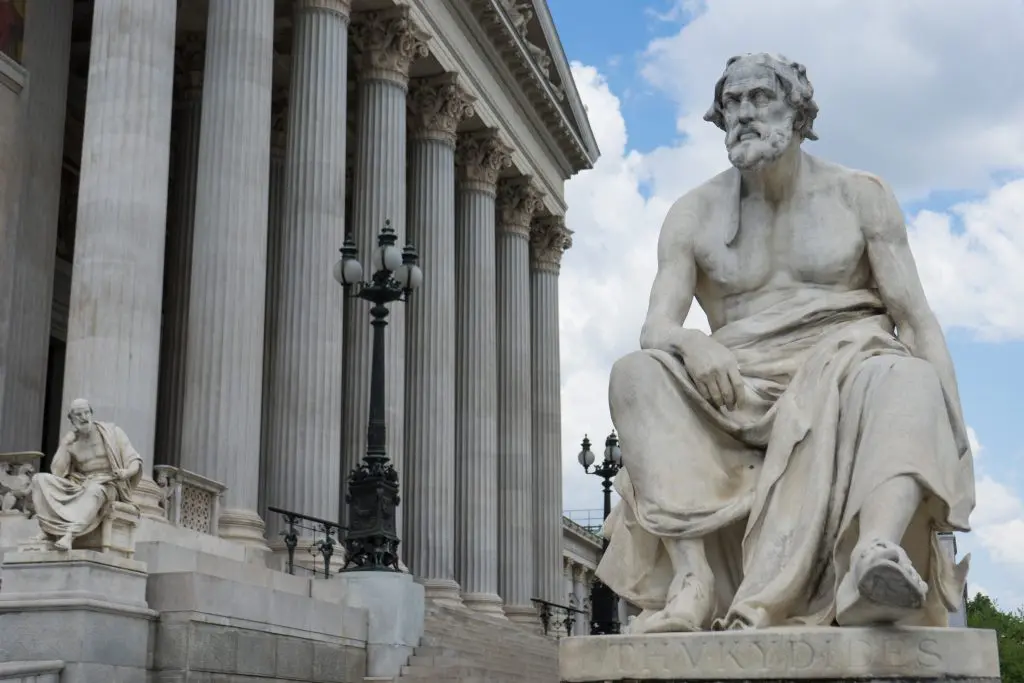
It appears that Carney is a student of Thucydides, a historian and military general famous for his recounting of the 5th century BC war between Athens and Sparta. This ancient Greek, who included literary speeches in his work as a device to recount the politics of his time, also understood human nature.
Specifically, Carney quoted Thucydides’ Melian Dialogue: “The strong do what they can and the weak must suffer what they must.” In doing so he deftly reached back in time, fishing out a stark aphorism about raw power still relevant today. He gave it a modern twist by making it about our lived experience of politics in 2026 to deliver a wakeup call at Davos and it worked.
Carney, it is worth noting, is an experienced communicator, the holder of a doctorate in economics and someone who knows the weight of words. He used the speech to successfully position himself as someone who speaks credibly and clearly about current geopolitical themes in society. He said “Let me be direct. We are in the midst of a rupture, not a transition.”
The speech earned the PM a standing ovation, was quoted all over the world, prompted positive social media engagement but more importantly stirred genuine discussion on the topic of the current world order.
At Davos, the discussions elsewhere focused on how geopolitics and media are fragmenting and that trust in our institutions is under fire. Carney chose to lean into that narrative and call it like it is, by calmly announcing a new non rules-based world order has arrived. His speech has been described as historic by some commentators.
Use Rhetorical Devices, a Call to Action and Storytelling to Draw in your Audience
So, we saw how Carney adeptly used the metaphor of the meal and referred to historical political texts in order to hook his audience. He also peppered his speech with other rhetorical devices such as antithesis, to effect. For example, he contrasted the old rules-based order with his idea of modern principled pragmatism.
Moreover, he used storytelling to deliver his high-stakes political messaging, turning to the tale of a greengrocer placing a sign in his window to show how totalitarian systems are maintained. An analogy lifted from Czech statesman Václav Havel’s 1978 essay ‘The Power of the Powerless’. Here, Carney’s call to action asked countries to take their signs down and to “live the truth.”
Define your Message Clearly
Carney, has after all, acted as governor of two of the world’s major central banks, the Bank of England and the Bank of Canada where he successfully steered policy. In central bank policy announcements, a tiny shift in nuance can impact investor expectations. resulting in a re-pricing of assets the world over. Traders hang on every word in an attempt to interpret a hawkish or dovish outlook and position their market trades based on where rates are headed. Clarity of intention is key. And at Davos, Carney was as clear as a bell. The old rules-based order is over and there is no going back. “Nostalgia is not a strategy”
Appeal to your stakeholders
When he wrote his speech, he probably asked himself – what do my stakeholders need to hear from me right now. And he came up with the idea that Middle power countries like Canada need to stick together. The implication was that if they don’t, they could get eaten alive by other power-hungry states.
To a room full of investors and money managers he made reference to the logic of markets and risk management in his speech. They lapped it up.
Conclusion: For a Speech to Travel Beyond the Room, Speak to Human Experience
His speech was noteworthy because people innately understand the law of the jungle where only the strongest survive unless people team together. It was told at the right time to the right audience in language they understood. It hit the mark so to speak, and it resonated beyond the room and remains eminently quotable like any great speech should.
Food for thought indeed when you are putting your next keynote address together.
Maria
Maria Daly is a Senior Corporate Communications Account Manager, Media Trainer and Speechwriter at Fuzion.